
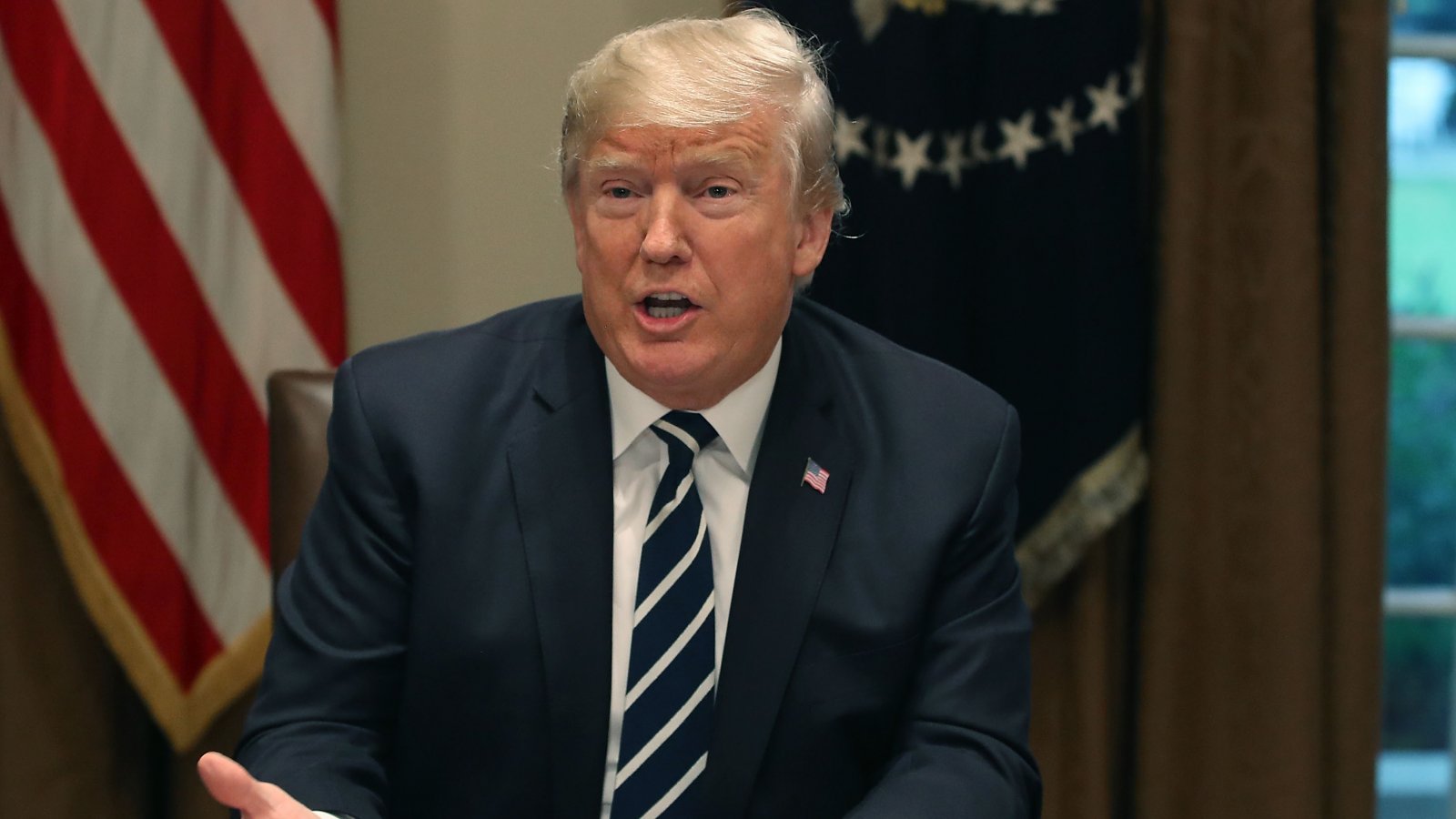
Donald Trump knew two weeks before he became president that Vladimir Putin personally ordered the attack on U.S. democracy, and yet, he has continued to deny it, calling the Russia investigation a "witch hunt" and "hoax."
Intelligence officials showed Trump "highly classified intelligence."
The evidence included texts and emails from Russian military officers and information gleaned from a top-secret source close to Mr. Putin, who had described to the C.I.A. how the Kremlin decided to execute its campaign of hacking and disinformation.
Mr. Trump sounded grudgingly convinced, according to several people who attended the intelligence briefing. But ever since, Mr. Trump has tried to cloud the very clear findings that he received on Jan. 6, 2017, which his own intelligence leaders have unanimously endorsed.
(...)
On Monday, standing next to the Russian president in Helsinki, Finland, Mr. Trump said he accepted Mr. Putin’s denial of Russian election intrusions. By Tuesday, faced with a bipartisan political outcry, Mr. Trump sought to walk back his words and sided with his intelligence agencies.
On Wednesday, when a reporter asked, “Is Russia still targeting the U.S.?” Mr. Trump shot back, “No” — directly contradicting statements made only days earlier by his director of national intelligence, Dan Coats, who was sitting a few chairs away in the Cabinet Room. (The White House later said he was responding to a different question.)
Hours later, in a CBS News interview, Mr. Trump seemed to reverse course again. He blamed Mr. Putin personally, but only indirectly, for the election interference by Russia, “because he’s in charge of the country.”
The New York Times details who shared information with the president-elect on January 6, 2017 and what exactly they said.
According to nearly a dozen people who either attended the meeting with the president-elect or were later briefed on it, the four primary intelligence officials described the streams of intelligence that convinced them of Mr. Putin’s role in the election interference.
They included stolen emails from the Democratic National Committee that had been seen in Russian military intelligence networks by the British, Dutch and American intelligence services. Officers of the Russian intelligence agency formerly known as the G.R.U. had plotted with groups like WikiLeaks on how to release the email stash.
And ultimately, several human sources had confirmed Mr. Putin’s own role.
That included one particularly valuable source, who was considered so sensitive that Mr. [John] Brennan had declined to refer to it in any way in the Presidential Daily Brief during the final months of the Obama administration, as the Russia investigation intensified.
Instead, to keep the information from being shared widely, Mr. Brennan sent reports from the source to Mr. Obama and a small group of top national security aides in a separate, white envelope to assure its security.
In spite of all the evidence, Trump intentionally continued to cast doubt.
After the briefings, Mr. Trump issued a statement later that day that sought to spread the blame for the meddling. He said “Russia, China and other countries, outside groups and countries” were launching cyberattacks against American government, businesses and political organizations — including the D.N.C.
Still, Mr. Trump said in his statement, “there was absolutely no effect on the outcome of the election.”
Mr. Brennan later told Congress that he had no doubt where the attacks were coming from.
“I was convinced in the summer that the Russians were trying to interfere in the election,” he said in testimony in May 2017. “And they were very aggressive.”
Today, as the threat of Russian cyber attacks escalates, the president still refuses to acknowledge or address it.
In March, the Department of Homeland Security declared that Russia was targeting the American electric power grid, continuing to riddle it with malware that could be used to manipulate or shut down critical control systems. Intelligence officials have described it to Congress as a chief threat to American security.
Just last week, Mr. [Dan] Coats said that current cyberthreats were “blinking red” and called Russia the “most aggressive foreign actor, no question.”
“And they continue their efforts to undermine our democracy,” he said.
Christopher A. Wray, the F.B.I. director, also stood firm.
“The intelligence community’s assessment has not changed,” Mr. Wray said on Wednesday at the Aspen Security Forum. “My view has not changed, which is that Russia attempted to interfere with the last election and continues to engage in malign influence operations to this day.”
The Russian efforts are “aimed at sowing discord and divisiveness in this country,” he continued. “We haven’t yet seen an effort to target specific election infrastructure this time. We could be just a moment away from the next level.”
“It’s a threat we need to take extremely seriously and respond to with fierce determination and focus.”
Full story: From the Start, Trump Has Muddied a Clear Message: Putin Interfered (NYT)