
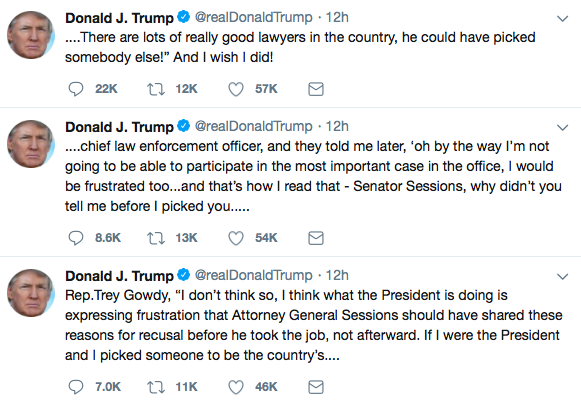
UPDATE: President Trump reiterated his frustration with Sessions' recusal again Wednesday, quoting Rep. Trey Gowdy (R-SC) from an appearance on CBS This Morning and tweeting he does wish he had chosen someone else.
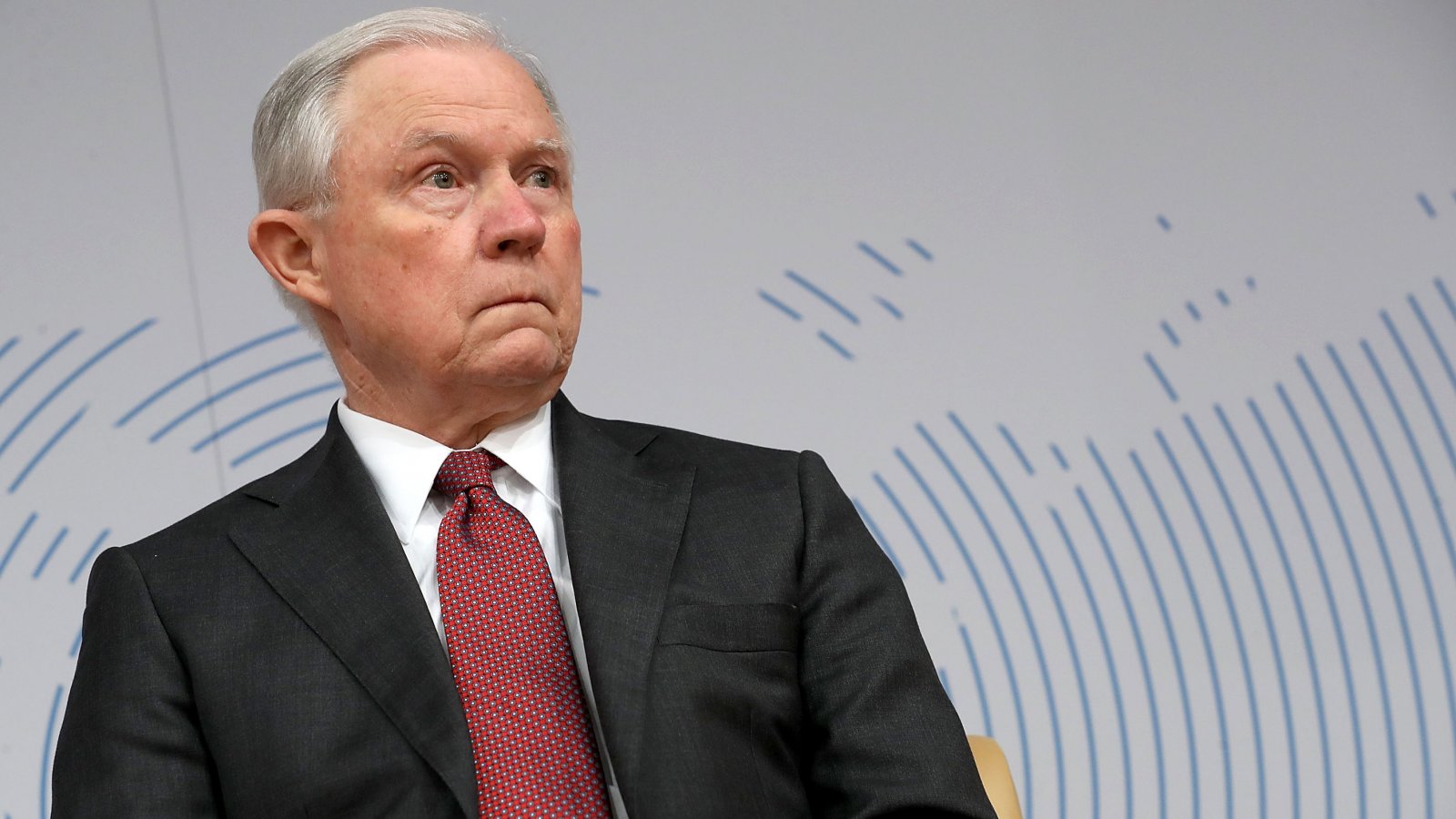
According to The New York Times, President Trump not only was furious Attorney General Jeff Sessions recused himself from the Russia investigation but also directly told Sessions, in March 2017, to change his mind.
Mr. Trump, who had told aides that he needed a loyalist overseeing the inquiry, berated Mr. Sessions and told him he should reverse his decision, an unusual and potentially inappropriate request.
Mr. Sessions refused.
The confrontation, which has not been previously reported, is being investigated by the special counsel, Robert S. Mueller III, as are the president’s public and private attacks on Mr. Sessions and efforts to get him to resign. Mr. Trump dwelled on the recusal for months, according to confidants and current and former administration officials who described his behavior toward the attorney general.
The special counsel’s interest demonstrates Mr. Sessions’s overlooked role as a key witness in the investigation into whether Mr. Trump tried to obstruct the inquiry itself. It also suggests that the obstruction investigation is broader than it is widely understood to be — encompassing not only the president’s interactions with and firing of the former F.B.I. director, James B. Comey, but also his relationship with Mr. Sessions.
Investigators have pressed current and former White House officials about Mr. Trump’s treatment of Mr. Sessions and whether they believe the president was trying to impede the Russia investigation by pressuring him. The attorney general was also interviewed at length by Mr. Mueller’s investigators in January. And of the four dozen or so questions Mr. Mueller wants to ask Mr. Trump, eight relate to Mr. Sessions. Among them: What efforts did you make to try to get him to reverse his recusal?
Trump's lawyer Rudy Giuliani says if the president does agree to interview with Special Counsel Robert Mueller, "he should not be forced to discuss his private deliberations with senior administration officials."
Mr. Giuliani said that he had not discussed Mr. Sessions’s recusal with Mr. Trump but that a request that Mr. Sessions reassert control over the Russia investigation would be within the bounds of the president’s authority.
“‘Unrecuse’ doesn’t say, ‘Bury the investigation.’ It says on the face of it: Take responsibility for it and handle it correctly,” Mr. Giuliani said on Tuesday evening.
Sessions decided to recuse himself from the Russia investigation after consulting with career lawyers at the Justice Department, who "advised Mr. Sessions to step aside, citing ethics guidelines about impartiality and his role as a prominent supporter of the Trump campaign." The president told White House Counsel Don McGahn to push Sessions to stay.
To Justice Department officials close to Mr. Sessions, the request by the president made through Mr. McGahn was inappropriate, particularly because it was clear to them that Mr. Sessions had to step aside. After Mr. Sessions told Mr. McGahn that he would follow the Justice Department lawyers’ advice to recuse himself from all matters related to the election, Mr. McGahn backed down. Mr. Sessions recused himself on March 2.
During a dinner at Mar-a-Lago two days later, Trump asked Sessions to reassert control over the investigation.
Prosecutors rarely go back on recusals. Legal experts said that occasionally, prosecutors who handed off a case to colleagues over concerns about a possible financial conflict of interest would take the decision back after confirming none existed. But the experts said they could think of no instance in which a prosecutor stepped aside from a case in circumstances similar to Mr. Sessions’s. Justice Department guidelines on recusal are in place to prevent the sort of political meddling the president tried to engage in, they said.
(...)
As the months wore on, Mr. Trump returned again and again to the recusal.
In July, he told The New York Times that he never would have nominated Mr. Sessions if he had known that Mr. Sessions would not oversee the Russia investigation. Two days later, a Washington Post report about Mr. Sessions’s campaign discussions with Russia’s ambassador sent Mr. Trump into another rage. Aboard Marine One that Saturday, the president told his chief of staff, Reince Priebus, to get Mr. Sessions to resign by the end of the weekend, according to a person briefed on the conversation.
(...)
Days later, Mr. Priebus was out as chief of staff. The special counsel has told the president’s lawyers that he wants to ask Mr. Trump about those discussions with Mr. Priebus and why he publicly criticized Mr. Sessions.
Full story: Trump Asked Sessions to Retain Control of Russia Inquiry After His Recusal (NYT)