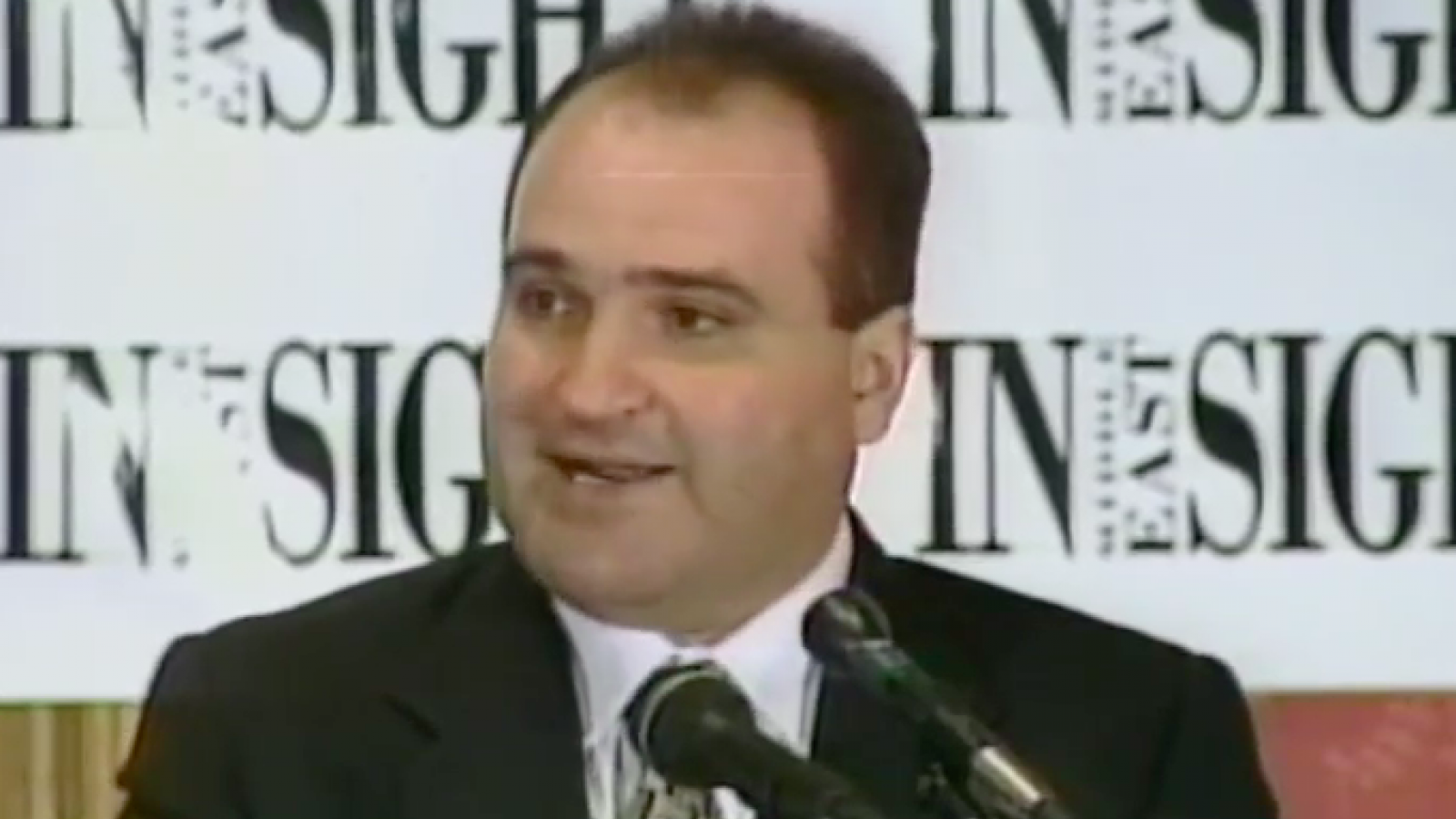
George Nader, the Lebanese-American businessman who is cooperating with Special Counsel Robert Mueller in the Russia investigation, forged a relationship with Elliott Broidy, the deputy finance chairman of the Republican National Committee, in an effort to influence President Trump's foreign policy decisions in favor of Saudi Arabia and the United Arab Emirates.
Nader is " a political adviser to the de facto ruler of the U.A.E."
NYT:
Hundreds of pages of correspondence between the two men reveal an active effort to cultivate President Trump on behalf of the two oil-rich Arab monarchies, both close American allies.
High on the agenda of the two men ... was pushing the White House to remove Secretary of State Rex W. Tillerson, backing confrontational approaches to Iran and Qatar and repeatedly pressing the president to meet privately outside the White House with the leader of U.A.E.
Mr. Tillerson was fired last week, and the president has adopted tough approaches toward both Iran and Qatar.
Mr. Nader tempted the fund-raiser, Mr. Broidy, with the prospect of more than $1 billion in contracts for his private security company, Circinus, and he helped deliver deals worth more than $200 billion with the United Arab Emirates. He also flattered Mr. Broidy about “how well you handle Chairman,” a reference to Mr. Trump, and repeated to his well-connected friend that he told the effective rulers of both Saudi Arabia and U.A.E. about “the Pivotal Indispensable Magical Role you are playing to help them.”
Mr. Nader’s cultivation of Mr. Broidy, laid out in documents provided to The New York Times, provides a case study in the way two Persian Gulf monarchies have sought to gain influence inside the Trump White House.
The New York Times says Mueller has granted Nader immunity in exchange for his cooperation.
NYT:
Mr. Mueller’s investigators have already asked witnesses about Mr. Nader’s contacts with top Trump administration officials and about his possible role in funneling Emirati money to Mr. Trump’s political efforts, a sign that the investigation has broadened to examine the role of foreign money in the Trump administration.
The NYT received the Nader-Broidy correspondence from an anonymous source. Broidy believes he is the victim of Qatari hackers.
The documents, which included emails, business proposals and contracts, were provided by an anonymous group critical of Mr. Broidy’s advocacy of American foreign policies in the Middle East. The Times showed Mr. Broidy’s representatives copies of all of the emails it intended to cite in an article. In his statement, Mr. Broidy said he could not confirm the authenticity of all of them, noting that The Times was able to show him only printouts and not the original emails.
A spokesman for Mr. Broidy has said he believes the documents were stolen by hackers working for Qatar in retaliation for his work critical of the country — a regional nemesis of the Saudis and Emiratis.
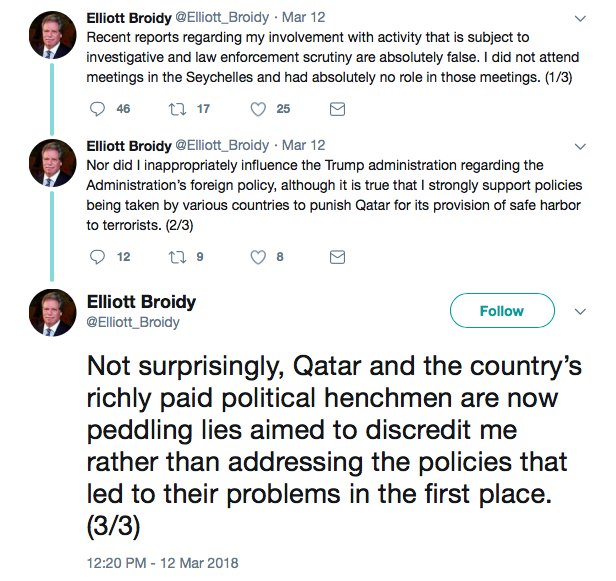
On March 12, Broidy tweeted that he had no inappropriate influence on the president's foreign policy.
Read more: How a Witness for Mueller and a Republican Donor Influenced the White House for Gulf Rulers (NYT)