
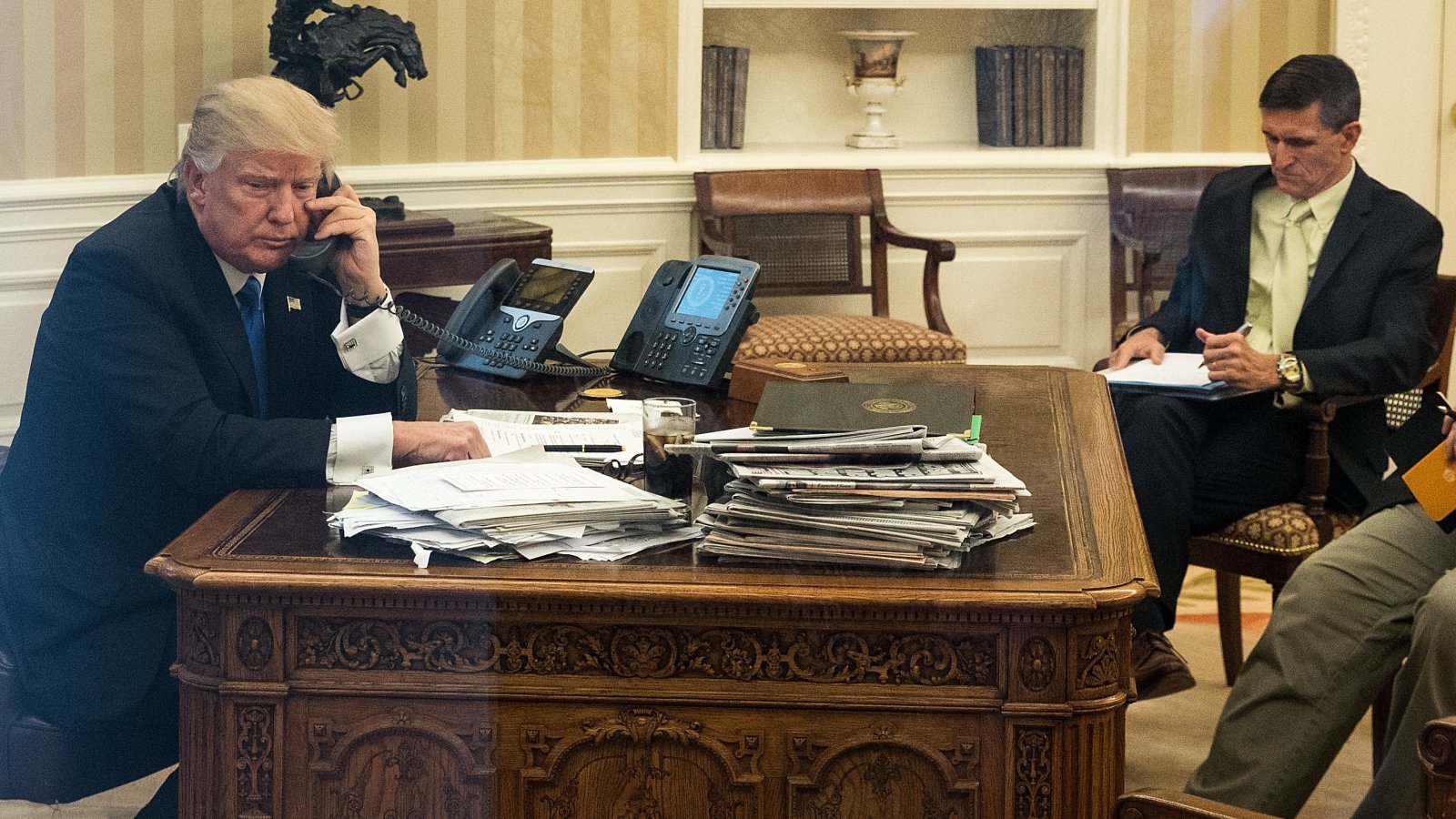
NBC News explains the special counsel's investigators are working to figure out what exactly took place in the Trump White House between January 26, 2017 and February 13, 2017. Those 18 days, the news outlet reports, could be important to an obstruction of justice case.
Former national security advisor Michael Flynn was sworn in on January 23, 2017. The next day, he interviewed with the F.B.I. and lied about prior conversations with Russian Ambassador Sergey Kislyak. Flynn told authorities the two men did not discuss sanctions, an assertion several administration officials repeated publicly.
Flynn's guilty plea for lying to the FBI now proves that claim untrue. Flynn not only discussed sanctions with Kislyak, but he also shared the content of those communications with colleagues:
Court documents from Flynn's plea deal show Flynn had discussed sanctions with Kislyak on Dec. 29 in coordination with Trump transition officials. NBC News reported that Flynn spoke with his incoming deputy K.T. McFarland to discuss what to say to Kislyak about the new U.S. sanctions in order to keep Russia from retaliating.
Sally Yates, acting attorney general in January, warned White House Counsel Don McGahn about Flynn's problematic dishonesty two days after the national security adviser lied to the F.B.I.
Yates has testified to Congress that she informed McGahn on Jan. 26 that Flynn had not been truthful in statements to senior members of the Trump team, including Vice President Mike Pence, when he said he did not discuss U.S. sanctions with Russia's ambassador, Sergey Kislyak. Yates said Flynn was susceptible to blackmail by the Russians because he had lied about the contents of a phone call with Kislyak.
(...)
That same day, Jan. 26, McGahn also briefed Trump and some of his senior advisers on his conversation with Yates, according to then-White House Press Secretary Sean Spicer.
"Immediately after the Department of Justice notified the White House counsel of the situation, the White House counsel briefed the president and a small group of senior advisers," Spicer told reporters on Feb. 14.
President Trump told Lester Holt during in interview in May that he "that he didn't ask for Flynn's resignation after Yates's warning because once McGahn looked into it, he "came back to me and [it] did not sound like an emergency."
These series of events brings into question why Trump kept Flynn on board:
Mueller is trying to determine why Flynn remained in his post for 18 days after Trump learned of Yates' warning, according to two people familiar with the probe. He appears to be interested in whether Trump directed him to lie to senior officials, including Pence, or the FBI, and if so why, the sources said.
If Trump knew his national security adviser lied to the FBI in the early days of his administration it would raise serious questions about why Flynn was not fired until Feb. 13, and whether Trump was attempting to obstruct justice when FBI Director James Comey says the president pressured him to drop his investigation into Flynn. Trump fired Comey on May 9.
Read more: Focus on Flynn, Trump timeline suggests obstruction is on Mueller’s mind (NBC News)