
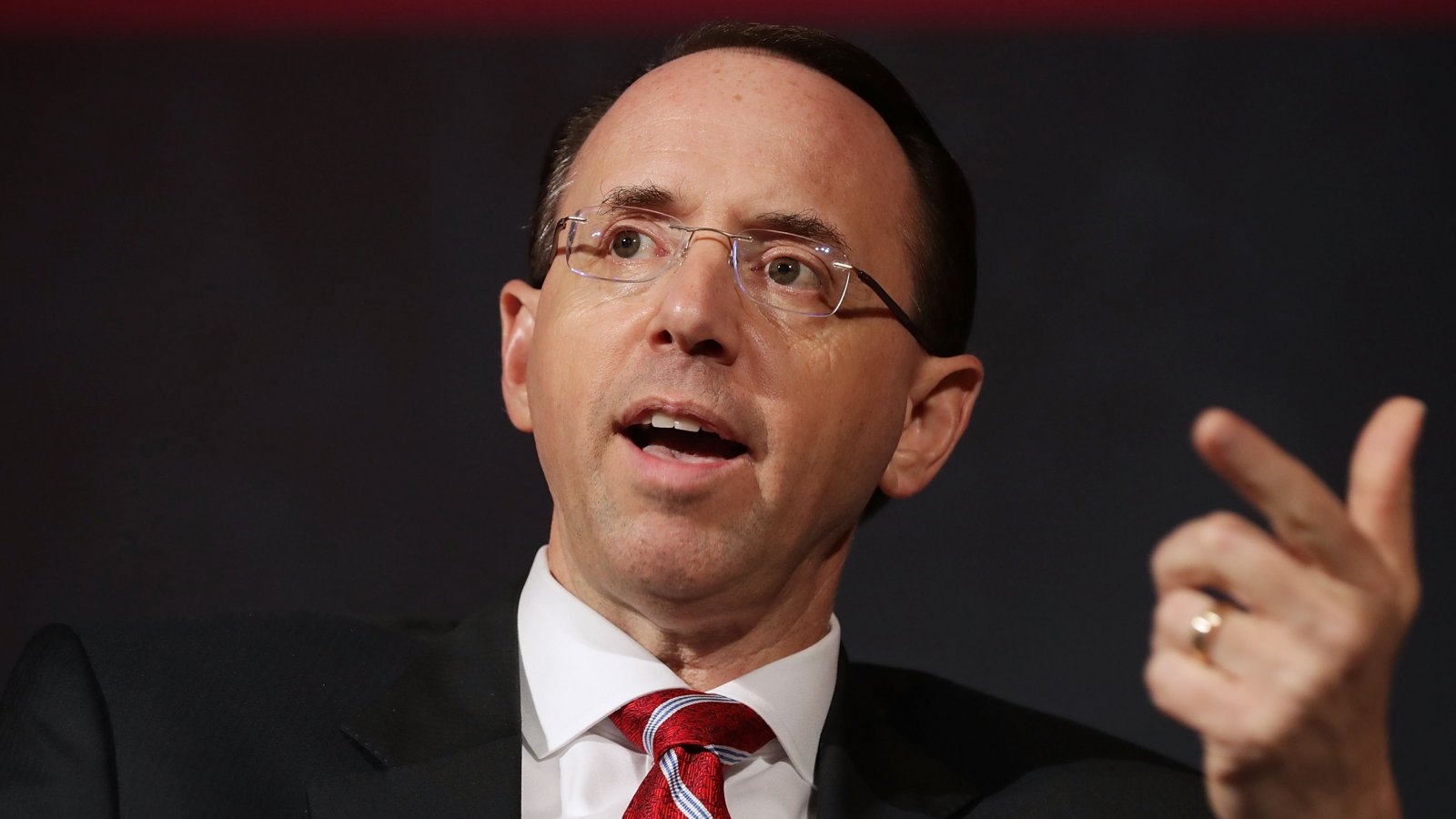
The New York Times reveals Deputy Attorney General Rod Rosenstein has been angry over his role in President Trump's firing of FBI Director James Comey, reportedly saying he felt used by the White House.
In public, Mr. Rosenstein has shown no hint that he had second thoughts about his role — writing a memo about Mr. Comey’s performance that the White House used to justify firing him. “I wrote it. I believe it. I stand by it,” Mr. Rosenstein said to Congress last year.
But in meetings with law enforcement officials in the chaotic days immediately after Mr. Comey’s dismissal, and in subsequent conversations with colleagues and friends, Mr. Rosenstein appeared conflicted, according to the four people.
He alternately defended his involvement, expressed remorse at the tumult it unleashed, said the White House had manipulated him, fumed how the media had portrayed the events and said the full story would vindicate him, said the people, who in recent weeks described the previously undisclosed episodes.
(...)
His public and private views demonstrate the dueling forces pulling at Mr. Rosenstein in the special counsel’s investigation of the president and his associates.
Mr. Rosenstein is both the ultimate supervisor of that case — and will determine what information is eventually provided to Congress — and a key participant in the matter being investigated. Mr. Trump’s lawyers also regard him as one of the essential witnesses for the president’s defense because Mr. Rosenstein, they say, wanted to get rid of Mr. Comey.
The Department of Justice offers a different explanation for Rosenstein's emotion.
A spokeswoman for the Justice Department, Sarah Isgur Flores, disputed the accounts of Mr. Rosenstein’s behavior. If he was angry in the days after Mr. Comey was fired, she said, it was because Mr. McCabe concealed from him the existence of memos by Mr. Comey about his interactions with Mr. Trump. Detailing the president’s requests for loyalty and to end the investigation into his national security adviser at the time, Michael T. Flynn, the memos were recounted in articles in The New York Times around that time.
(...)
A person close to Mr. McCabe disputed her account, saying Mr. Rosenstein did not bring up the memos with him.
Rosenstein, a Republican appointed by President Trump, was only on the job two weeks when he became a part of the president's plot to remove Comey.
Even before he enlisted Mr. Rosenstein to write the justification, Mr. Trump had already decided to fire Mr. Comey. Mr. Trump had grown frustrated that Mr. Comey refused to say publicly that, in the investigation of the Trump campaign’s ties to Russia, the president himself was not under scrutiny. Mr. Trump wrote a rambling firing letter, but White House officials urged him not to send it. Instead, they turned to Mr. Rosenstein.
His resulting memo, however, focused on Mr. Comey’s handling of the 2016 investigation of Mrs. Clinton.
That excuse, initially embraced by the White House, didn't hold for long. The president himself told Lester Holt on national television that he fired Comey because of the Russia investigation, which has become just one piece of evidence in a possible obstruction of justice case.
Shortly after the firing, Mr. Trump told senior Russian officials in the Oval Office that the dismissal relieved “great pressure” on him. And his lawyer, Rudolph W. Giuliani, has said Mr. Comey was fired for refusing to publicly exonerate Mr. Trump.
On the afternoon that Mr. Mueller’s appointment was announced, Mr. Sessions was in the Oval Office with the president discussing candidates to be F.B.I. director when they both learned that Mr. Rosenstein had made his decision. Mr. Trump erupted in anger, saying he needed someone overseeing the investigation who would be loyal to him. Mr. Sessions offered to resign.
Mr. Sessions felt blindsided by Mr. Rosenstein’s decision. After leaving the White House, Mr. Sessions’s chief of staff, Jody Hunt, confronted Mr. Rosenstein, demanding to know why he had not given them advance warning, according to a lawyer briefed on the exchange. Mr. Rosenstein has told others that he was worried at the time he would be fired by the president.
Andrew C. White, a former federal prosecutor who worked with Mr. Rosenstein and remains close to him, said he believed Mr. Rosenstein “had every right to be furious.”
‘Shaken’ Rosenstein Felt Used by White House in Comey Firing (NYT)