As the United States continues to use sanctions as a means of punishing Russia for ongoing international acts of aggression, including its interference in the 2016 U.S. presidential election, Trump administration officials are facing the challenge of implementing those sanctions in a way that makes a sufficient impact but doesn't tank global markets.
Compared with other countries that have been under U.S. sanctions, including Iran, Cuba, Myanmar and North Korea, Russia plays a bigger role in global commerce, giving the sanctions more potential to sting — both their intended targets and unintended bystanders in the United States and Europe, economists and trade experts say.
Russia “is part of the world economy,” said Richard Sawaya, a sanctions expert at the National Foreign Trade Council, an industry-financed organization that advocates free trade. “It’s a member of the World Trade Organization,” he said. “Its banks are connected throughout Europe and the U.S.”
New sanctions scheduled to start today are mandated by law as punishment for Russia's use of a banned chemical nerve agent on former double agent Sergei Skripal and his daughter Yulia in Salisbury, England last March.
After an initial ban on some U.S. technology exports to Russia, a second stage of the sanctions could follow later this year with penalties including a ban on Russian airlines landing in the United States.
Russian lawmakers say the measures could prompt Moscow to halt exports of its RD-180 rocket engines, which the United States uses to launch government satellites. Russian state television said Moscow could also retaliate by charging U.S. airlines more to traverse Russian airspace en route to Asia.
Congress, meanwhile, is considering additional sanctions to punish Russian “aggression,” including its interference in U.S. elections. The bipartisan legislation would ban U.S. investors from buying new shares of Russian government debt. It would also cut some Russian banks’ access to U.S. dollars, a step that would “very, very seriously hit the Russian financial system,” said Vladimir Milov, economic adviser to Russian opposition politician Alexei Navalny, a foe of President Vladimir Putin.
The bill’s energy-related sanctions could prove particularly harmful to European companies, said Jacob Kirkegaard, senior fellow at the Peterson Institute for International Economics in Washington ...
(...)
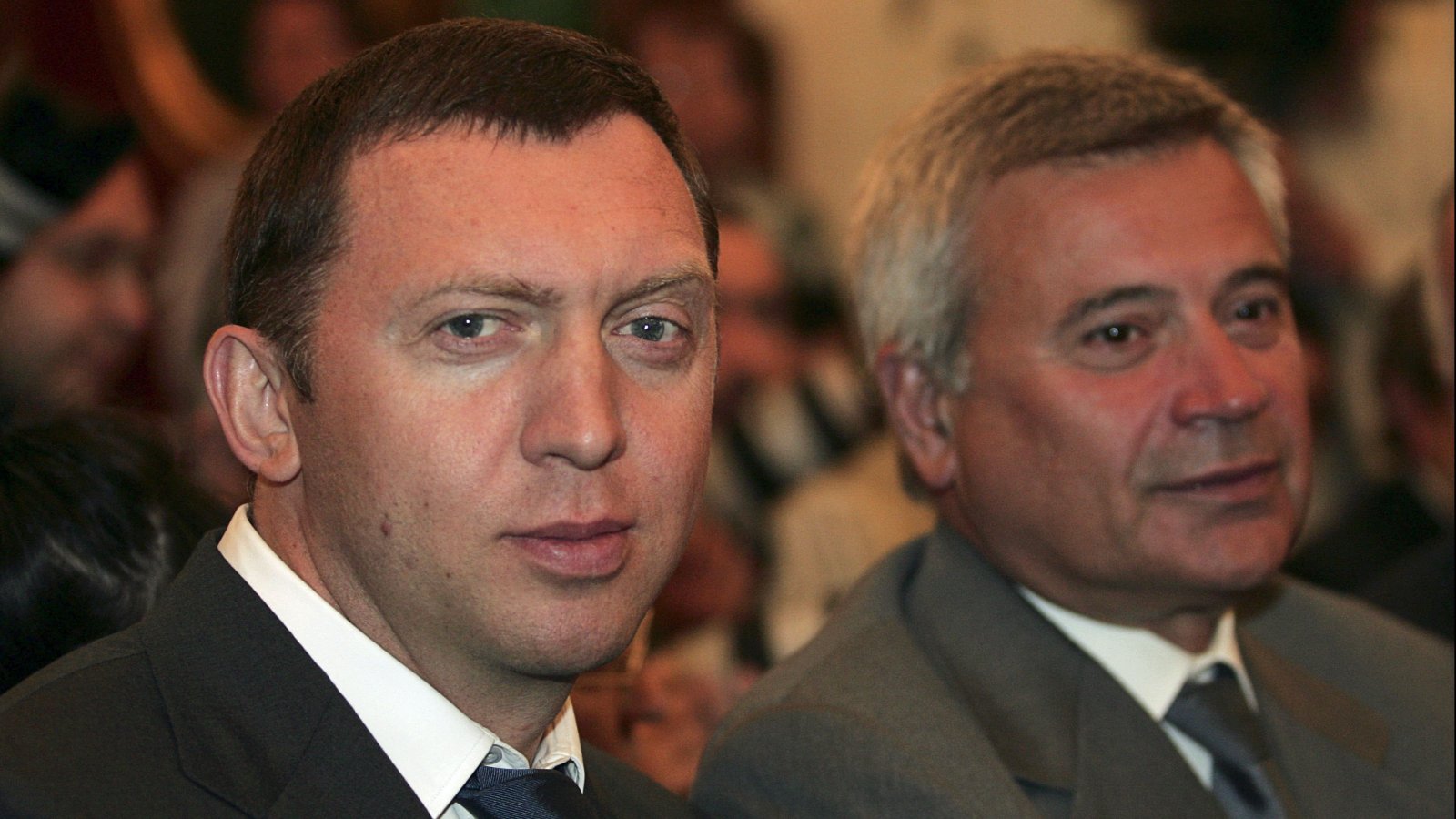
[Oleg] Deripaska’s camp is dangling the threat of even worse outcomes for the United States if Washington doesn’t lift the Rusal sanctions. Failure to reach a deal could lead the holding company through which Deripaska controls the aluminum producer to seek “other avenues to resolve the current impasse, including a potential acquisition by Chinese interests or the potential nationalization of the company by Russia,” according to Justice Department filings made by a U.S. lobbying firm representing the holding company’s chairman.
(...)
To placate Treasury, Deripaska has “agreed in principle” to reduce his shareholding in En+ Group, the holding company that controls Rusal, from 70 percent to below 50 percent, according to En+, which says it is working “with Mr. Deripaska and his family to transfer their assets to approved organizations or trustees.” Deripaska and his allies have also resigned from the boards of Rusal and En+.
Full story: Too big to sanction? U.S. struggles with punishing large Russian businesses. (WaPo)
US sanctions on Russia tied to UK spy attack to take effect Monday (Reuters)