Three million civilians in Syria's Idlib province, half of whom are refugees from fighting elsewhere during the nation's seven-year war, now are at risk as President Bashar al-Assad is planning move on this last region held by a militant group tied to al-Qaeda.
The Syrian government has announced plans to launch an assault on the rebel-held area of Idlib. The prospect of another chemical-weapon attack has already led to a U.S. threat of missile strikes in retaliation, with President Trump tweeting a warning to Syrian President Bashar al-Assad.
But there’s another weapon being deployed. Russia has begun laying the groundwork for an online influence operation aimed at turning U.S. public opinion against such a strike.
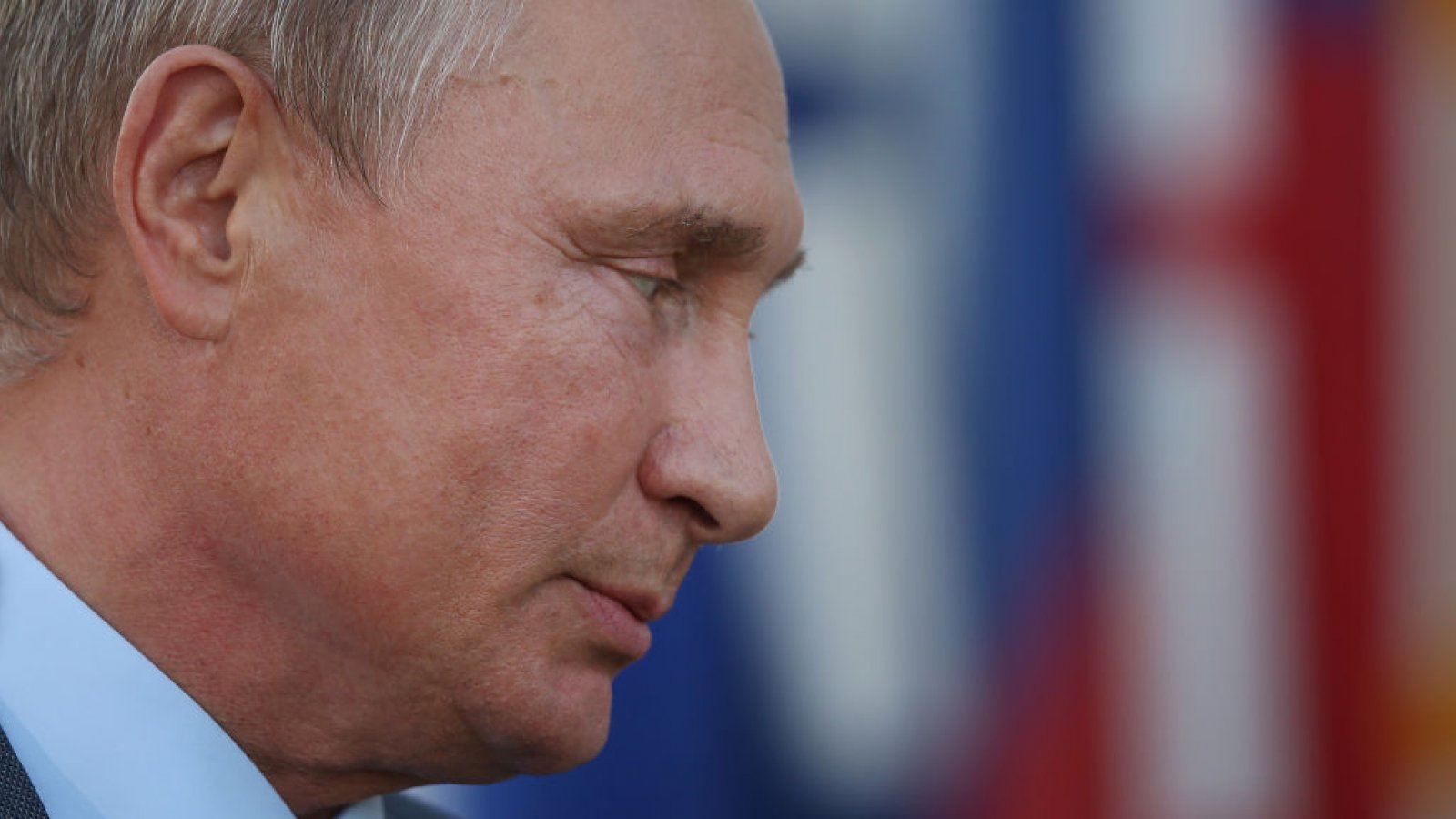
Russian President Vladimir Putin backs Syrian President Bashar al-Assad.
The Washington Post analyzed Twitter activity after the April 2018 chemical attack in Douma, Syria in an effort to predict what a online influence campaign might look like following a chemical attack in Idlib:
It is common to see trolls attempt to exploit domestic political divisions.
Additionally, the Russian strategy deploys the technique of having accounts respond to users we call “high influence individuals.” On Twitter, upon opening a user’s tweet, the responses to that tweet automatically display underneath. By responding to influential Twitter accounts, such as Trump’s, fake accounts have the potential to be seen by millions of other users.
Across the fake accounts that we examined, we observed a number of disinformation themes repeated consistently across multiple chemical attacks. These same themes have already emerged in recent weeks. This suggests that Russia has begun to use disinformation, in preparation for the assault on Idlib.
The most common themes to watch out for include messages that:
- Implicate the White Helmets — group of volunteers that rescues civilians in Syria — in faking or conducting a chemical attack.
- Blame terrorists for carrying out the attack.
- Insist that World War III would break out if the U.S. were to attack the Syrian regime.
- Claim that attacking the Syrian regime would help terrorists.
- Say that the U.S. or U.K. carried out or faked the attack in order to justify a war aimed at overthrowing Assad.
- Proclaim that the “Deep State” is manipulating Trump.
- Warn that the U.S. should not strike against President Bashar al-Assad because he’s a secular leader who protects Syria’s Christians.
Assad has a long track record of using chemical weapons in Syria’s civil war. If he uses them again in Idlib, his ally in Moscow will be sure to come to his aid — perhaps not with weapons but certainly with Twitter accounts. The Russian campaign to spread disinformation is aggressive and evolves rapidly, but these are some of the common hallmarks of suspicious accounts.
The Washington Post also has an excellent video explainer of what is at stake for the innocent civilians in Idlib:
Read more: A final Syrian showdown looms. Millions of lives are at risk. Here are the stakes. (WaPo)