
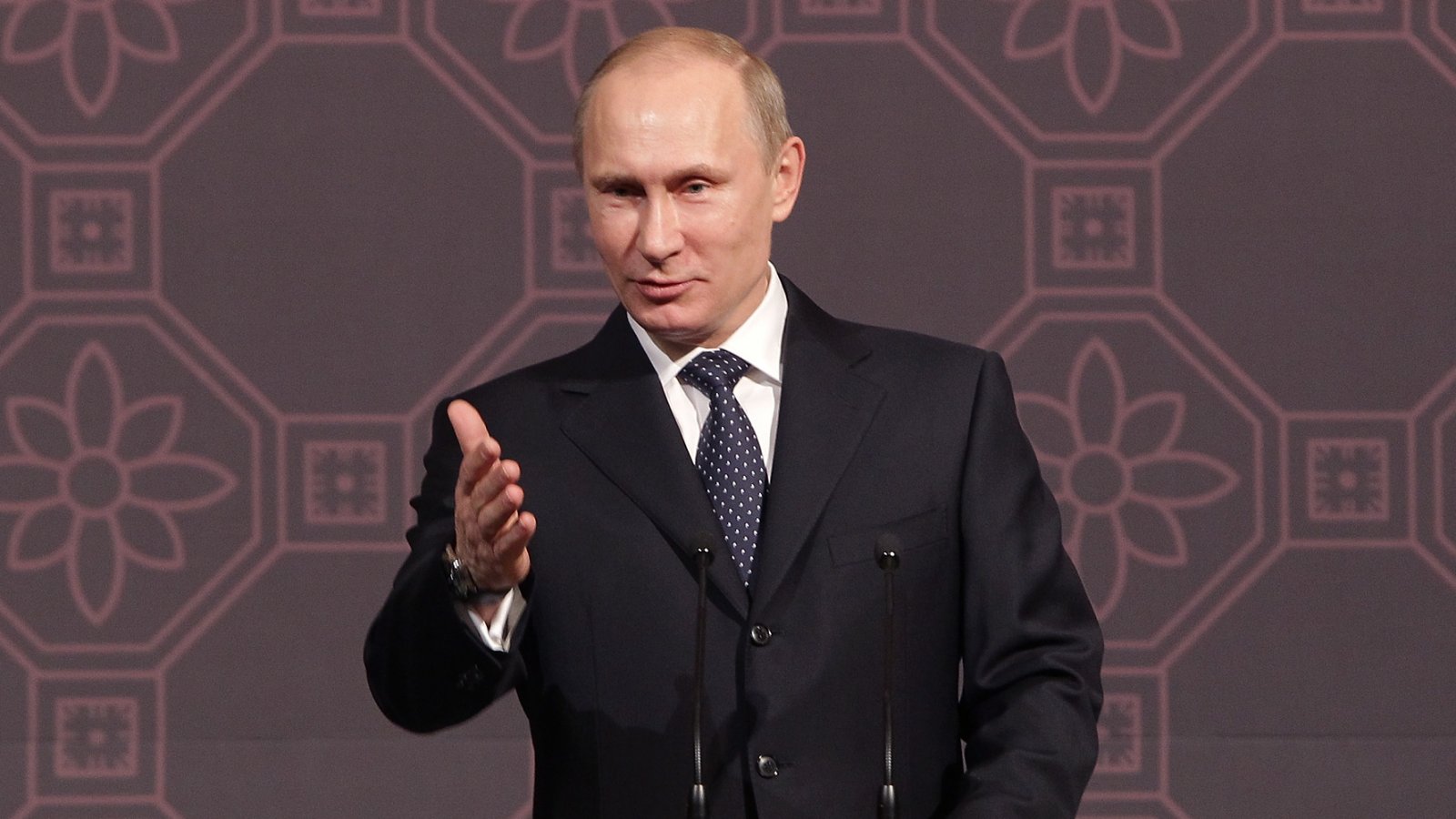
Forbes Contributor Ariel Cohen explains Russia President Vladimir Putin has two good reasons to want President Trump to make nice with North Korean dictator Kim Jong-un. Opening up North Korea could yield big gains for Russia's energy sector and overall economy.
Over the weekend South Korean President Moon Jae-in met with Vladimir Putin to discuss potential trilateral economic cooperation involving Russia, South Korea, and the DPRK. The possibility of linking the three nations through critical infrastructure was discussed in-depth, as was the notion of a free-trade agreement (FTA). Though no documents have been signed, Moon expressed his intent to set an FTA process in motion that could boost Korea-Russia trade to USD $30 billion by 2030.
(...)
The trans-Korea gas pipeline is near the top of this infrastructure to-do list. Russia’s state-owned supplier Gazprom and Korea’s gas monopoly Kogas have been attempting to construct a pipeline carrying Russian gas to Korea via the DPRK since Putin visited Pyongyang in 2001 (plans for a joint power grid and railroad were also discussed) . Not surprisingly, attempts to finalize the project have been frustrated time and again by security concerns – much like the bedeviled Turkmenistan-Afghanistan-India Pipeline (TAPI). Infrastructure challenges further complicated matters, including different-sized rail gauges between Russia and the Koreas, as well as lack of power generation in Russia's remote Far East.
In 2011 Gazprom chairman Alexey Miller and Kogas president Choo Kangsoo felt that these obstacles could be overcome, and established a roadmap to pipe 7.5 million metric tons of gas per year (mt/y) from Vladivostok, Russia to Seoul under a 30-year contract. Some 700 kilometers of pipe would pass through North Korea – which would receive handsome transit fees. But due to the financial crises and the leadership transition in the DPRK shortly thereafter, the pipeline was delayed until 2015. Increased hostility on the Peninsula led to further delays until 2017.
Moscow and Seoul are hoping that recent pledges of denuclearization and sanctions relief could provide the window to make this arrangement possible.
Cohen points out that Russia's economy relies heavily oil and gas sales, and Putin sees opportunity on the Korean peninsula.
... [A]s part of its 2030 Energy Strategy, Moscow wishes to diversify as much as 25% of its natural gas sales to Asia. As an added incentive, Russia’s penetration of Asian energy markets could also yield geopolitical influence at the cost of her Western competition (Canada, Australia, U.S.) which is trying to establish its own foothold in the booming market.
Korea is a huge energy importer and recognizes benefit in bringing in Russian resources.
Korea is also cognizant of its over-reliance on Middle East gas suppliers, who together account for 90% of imports. From an energy security standpoint, Russia would add diversification to the ROK fuel mix.
Cohen concludes by encouraging President Trump to solicit Putin's help with holding Kim Jong-un to his alleged commitments.
While the United States should be wary of Seoul’s growing closeness with Moscow, it can (and should) seize this to opportunity to bring Russia on board with North Korean denuclearization. Any lasting peace on the Peninsula will require buy-in from Russia, and now seems as good a chance as any.