
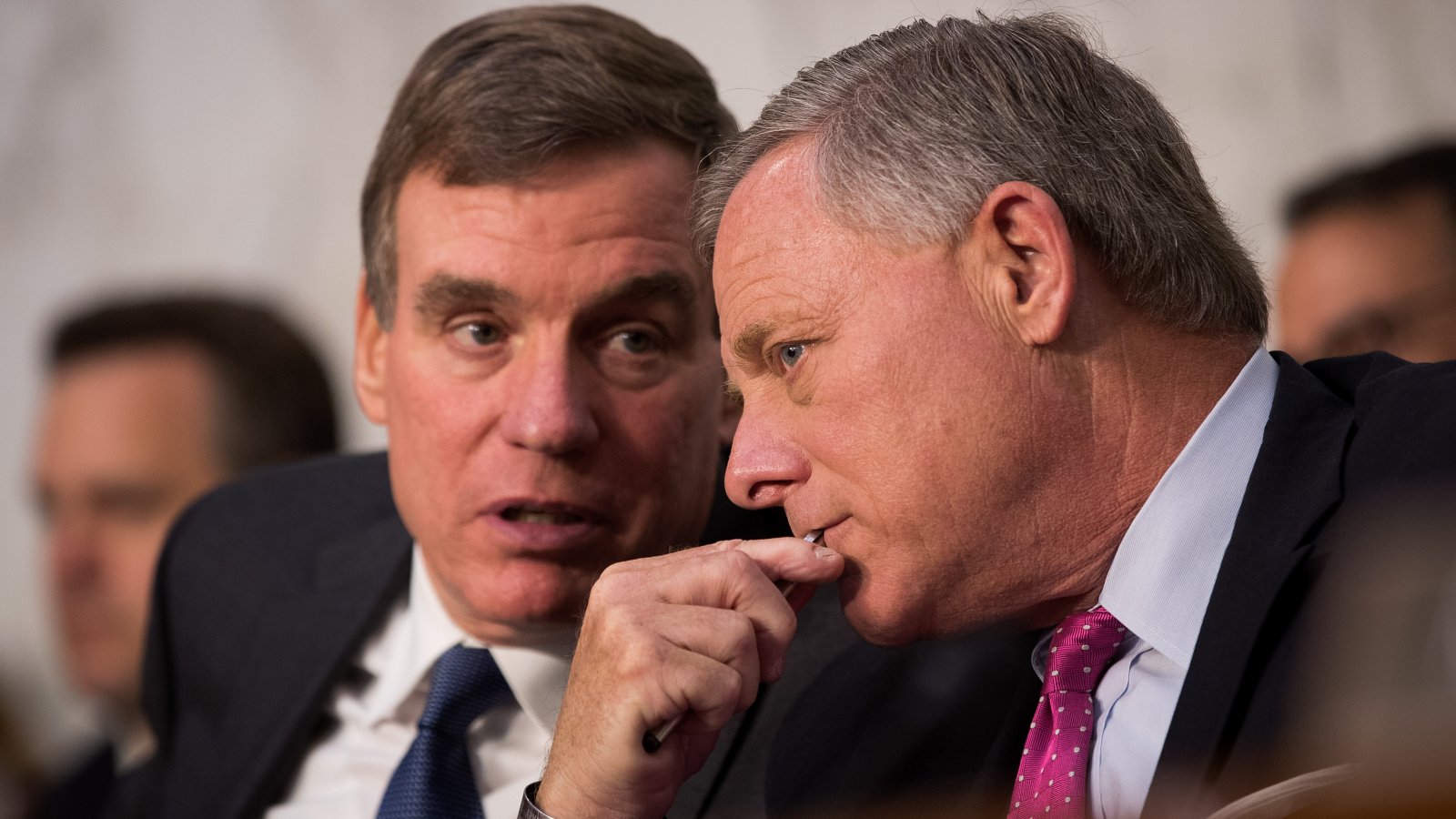
According to CNN, Senate Intelligence Committee Chairman Richard Burr (R-NC) is making an effort to differentiate his committee's work on the Russia investigation from that of his Republican counterparts on the House side.
For one thing, Senator Burr did not agree with House Intelligence Committee Chairman Devin Nunes' (R-CA) decision to release his controversial memo against FBI and DOJ warnings.
"I don't think there was any need for a memo to be released," the North Carolina Republican said in the Capitol.
(...)
For now, the Senate committee ... is still investigating whether any collusion occurred with Russia.
And the committee is taking steps aimed at showcasing its bipartisan credentials, preparing to hold an open hearing and release a report highlighting election vulnerabilities as soon as next month -- around the time of the early primaries -- which will include recommendations to states, localities and the federal government.
As CNN notes, Senator Burr and committee Vice Chairman Mark Warner (D-VA) do not agree on everything but are maintaining a united public front.
After staff members interviewed Trump officials, Democrats have demanded that senators have a chance to grill them in person, including Donald Trump Jr., adviser Jared Kushner and attorney Michael Cohen.
After Burr publicly promised with Sen. Mark Warner of Virginia, the committee's ranking Democrat, to hold a public hearing with Cohen, he has yet to move on holding one. Plus some Democrats on the committee, like Oregon's Ron Wyden, have publicly criticized its leadership for not "following the money" in the Russia investigation, by looking at any Trump financial ties with Russia.
(...)
Some Democrats on the committee have complained publicly and privately that Burr is not moving fast enough to public hearings, and concerns have been raised at various points that the probe is understaffed, given the committee's other oversight responsibilities.
(...)
So far, Burr and Warner have publicly stayed on the same page. While Warner has been calling for public hearings, he's been careful to stay on Burr's side that the investigation has to reach a certain point before the hearings will be held.
"Let's take one step at a time," Warner said Monday. "First is the election security issue, and that we've got to get that out before the primaries get started."
A source close to the committee said the investigation hasn't reached the point of public hearings yet because the panel has closed-door witness interviews scheduled into March.
Chairman Burr's discretion seems not only intentional but effective.
"The remarks of every individual who has come in before us has commented on their professionalism, and the fact that at the end of eight hours they couldn't tell who was a Democrat and who was a Republican," Burr said. "So the effort to be bipartisan has not just been public, it is private as well. And it permeates all the way down through our staff."
(...)
Burr has taken pride in flying under the radar as his committee has interviewed more than 100 witnesses. The interviews have taken place behind closed doors with staff members -- rather than lawmakers posing the questions, like the House committee -- which has angered some members, who say they want a chance to interview key witnesses. But information is kept so tightly guarded that members of the committee rarely know the full witness list on any given day.
That approach has sometimes paid off: Former FBI Director James Comey has testified only before the Senate Intelligence Committee since he was fired last spring, and the Senate panel was the only one able to talk to former Trump campaign chairman Paul Manafort before he was indicted last fall by special counsel Robert Mueller.
As for timing, Burr does not seem to be interested in rushing things when it comes to the biggest question his committee is investigating.
Burr wants to get the election security recommendations out next month, when the primaries start, and he said his committee will also soon put out its review of the intelligence community's assessment of Russian interference in the 2016 election.
But he's not putting a timeline on when the committee will wrap up its investigation into possible collusion.
"We will continue to work toward conclusions related to any cooperation or collusion by any individual, campaign or company with efforts to influence the outcome of elections or to create societal chaos in the United States," Burr said Tuesday.
Full story: Senate Intel Chair Burr steers clear of House counterpart Nunes in Russia probe (CNN)