
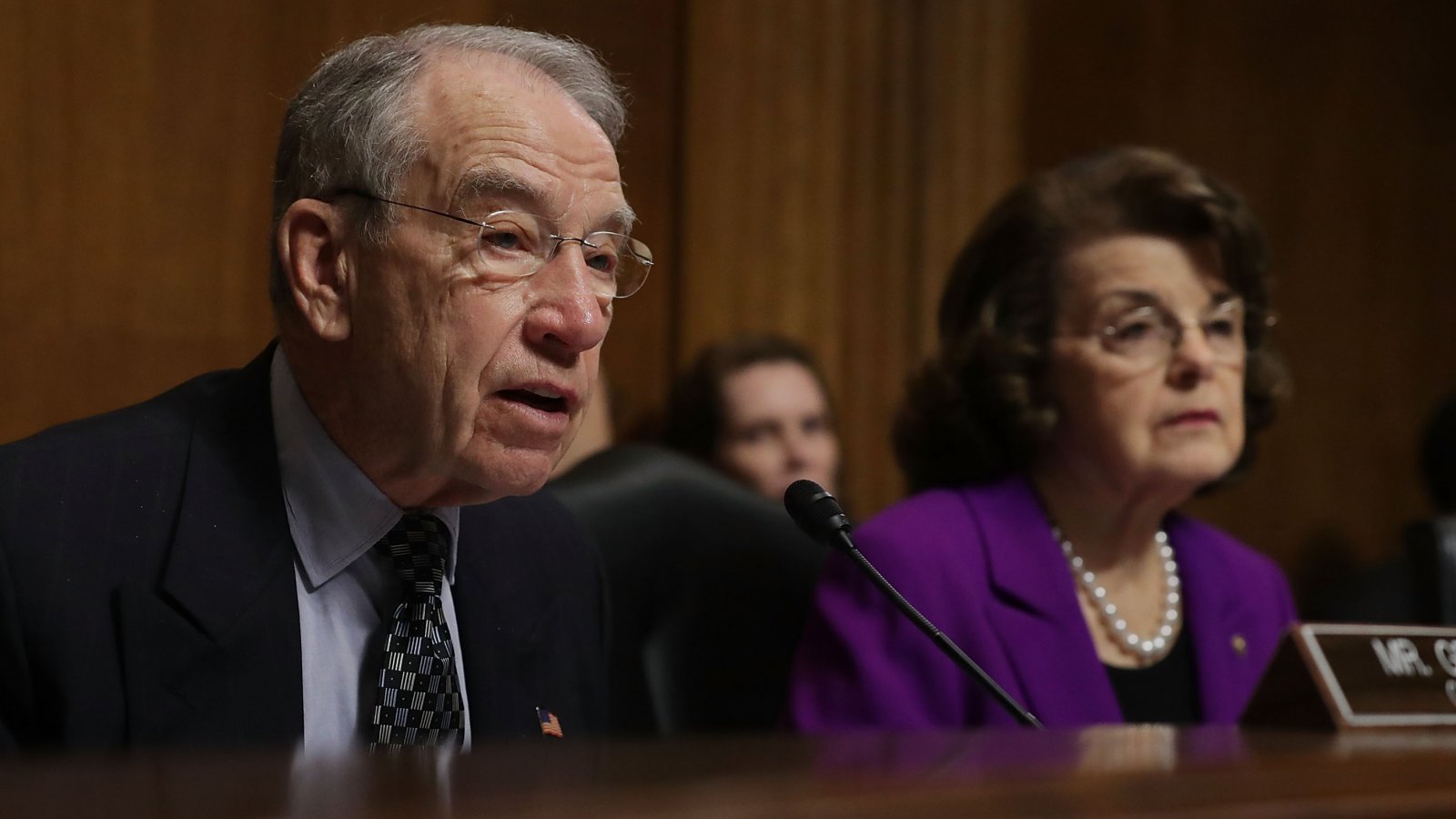
A bipartisan bill designed to stop President Trump from firing Special Counsel Robert Mueller without good cause is facing some opposition over specifics, slowing it down in committee. Senate Judiciary Committee Chairman Chuck Grassley (R-IA), who decided to move the legislation forward this week, says he still has constitutional concerns about whether Congress has the right to limit the president's authority.
CNN:
And a fight is already brewing ahead of an expected markup later this month about an amendment from Grassley that would add requirements for the special counsel to report to Congress about changes to the scope of the investigation and decisions to prosecute or not prosecute.
Democrats say that the amendment could undermine the Mueller investigation, and the committee's top Democrat, Sen. Dianne Feinstein of California, asked for the bill to be delayed because she hadn't been able to view the amendment yet. As a result, the committee markup is expected in two weeks.
"I'm worried about an amendment we haven't been able to review that could undermine the investigation," Feinstein said in a statement.
(...)
Grassley argued Thursday that the amendment would strengthen the special counsel bill, and not undermine Mueller, by adding reporting requirements to Congress.
(...)
A Republican aide said that the amendment, which is not yet finalized, is expected to add reporting requirements to Congress, including notification from the special counsel about changes to the probe's scope, decisions to prosecute or not prosecute and the special counsel's firing.
It's expected to include language requiring 30-day reporting requirements to Congress that are mirrored after inspector general regulations, the aide said.
(...)
Even if the committee successfully passes the bill in committee, it still faces major obstacles, as Senate Republican leaders have argued the measure is not necessary because President Donald Trump isn't going to fire Mueller — and that he wouldn't sign the bill anyway.
(...)
At Thursday's Senate Judiciary Committee meeting, senators danced around the potential clash over the bill during its markup.
While he raised constitutional concerns, Grassley said that the bill was an improvement from the initial measures introduced last year, noting specifically that it included a "severability" clause that would keep some of the legislation intact if the courts ruled part of it was unconstitutional.
Grassley predicted that the courts would ultimately have to determine whether the legislation was constitutional.
Full story: Special counsel protection bill still faces major roadblocks (CNN)