
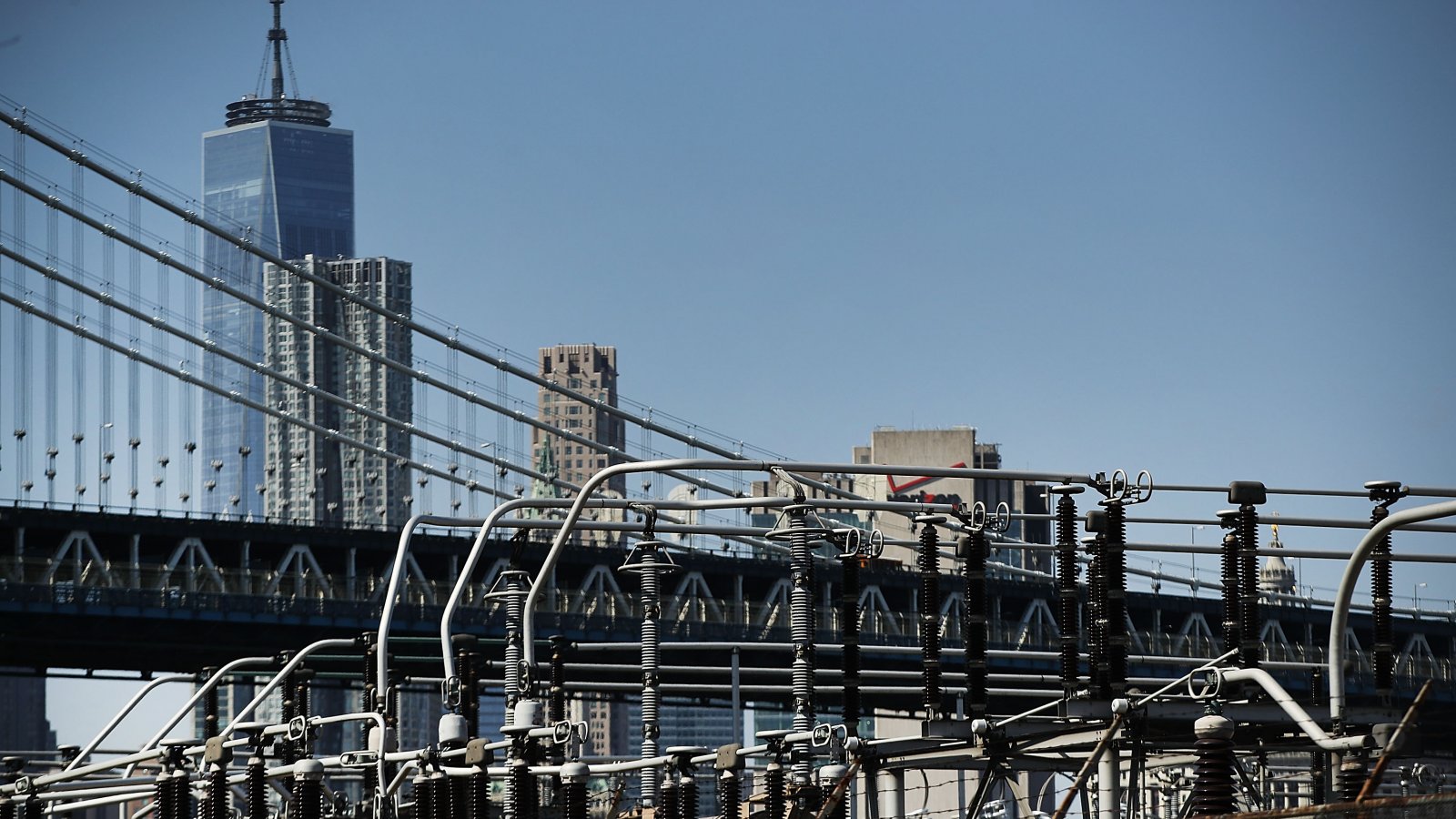
According to Department of Homeland Security officials, Russian hackers launched a prolonged cyberattack on U.S. utility networks in the spring of 2016 and successfully gained enough access to turn off services.
They said the campaign likely is continuing.
The Russian hackers, who worked for a shadowy state-sponsored group previously identified as Dragonfly or Energetic Bear, broke into supposedly secure, “air-gapped” or isolated networks owned by utilities with relative ease by first penetrating the networks of key vendors who had trusted relationships with the power companies, said officials at the Department of Homeland Security.
“They got to the point where they could have thrown switches” and disrupted power flows, said Jonathan Homer, chief of industrial-control-system analysis for DHS.
DHS has been warning utility executives with security clearances about the Russian group’s threat to critical infrastructure since 2014. But the briefing on Monday was the first time that DHS has given out information in an unclassified setting with as much detail. It continues to withhold the names of victims but now says there were hundreds of victims, not a few dozen as had been said previously.
(...)
Experts have been warning about the Russian threat for some time.
“They’ve been intruding into our networks and are positioning themselves for a limited or widespread attack,” said Michael Carpenter, former deputy assistant secretary of defense, who now is a senior director at the Penn Biden Center at the University of Pennsylvania. “They are waging a covert war on the West.”
Russia has denied targeting critical infrastructure.
DHS is providing details on how the hackers infiltrated systems.
Mr. Homer said the cyber-attack, which surfaced in the U.S. in the spring of 2016 and continued throughout 2017, exploited relationships that utilities have with vendors who have special access to update software, run diagnostics on equipment and perform other services that are needed to keep millions of pieces of gear in working order.
The attackers began by using conventional tools—spear-phishing emails and watering-hole attacks, which trick victims into entering their passwords on spoofed websites—to compromise the corporate networks of suppliers, many of whom were smaller companies without big budgets for cybersecurity.
Once inside the vendor networks, they pivoted to their real focus: the utilities. It was a relatively easy process, in many cases, for them to steal credentials from vendors and gain direct access to utility networks.
Then they began stealing confidential information. For example, the hackers vacuumed up information showing how utility networks were configured, what equipment was in use and how it was controlled. They also familiarized themselves with how the facilities were supposed to work, because attackers “have to learn how to take the normal and make it abnormal” to cause disruptions, said Mr. Homer.
Their goal, he said: to disguise themselves as “the people who touch these systems on a daily basis.”
The Journal reports DHS has more briefings planned in an effort to get more industry buy-in and, at the same time, still is trying to figure out how advanced the hackers are and how close a large-scale attack may be.
One thing the agency is trying to learn is whether there are new infections, and whether the Russians have figured out ways to defeat security enhancements like multifactor authentication.
In addition, DHS is looking for evidence that the Russians are automating their attacks, which investigators worry could presage a large increase in hacking efforts. “To scale, they’re eventually going to have to automate,” Mr. Homer said.
(...)
It isn’t yet clear whether the hackers used their access to prepare the battlefield for some future, devastating blow, investigators said. For example, many experts fear that a skilled technician could use unfettered access to change some equipment’s settings. That could make them unreliable in unexpected ways, causing utility engineers to do things that would result in extensive damage and potentially lengthy blackouts.
Russian Hackers Reach U.S. Utility Control Rooms, Homeland Security Officials Say (WSJ) *Note: All WSJ articles appear behind a paywall