
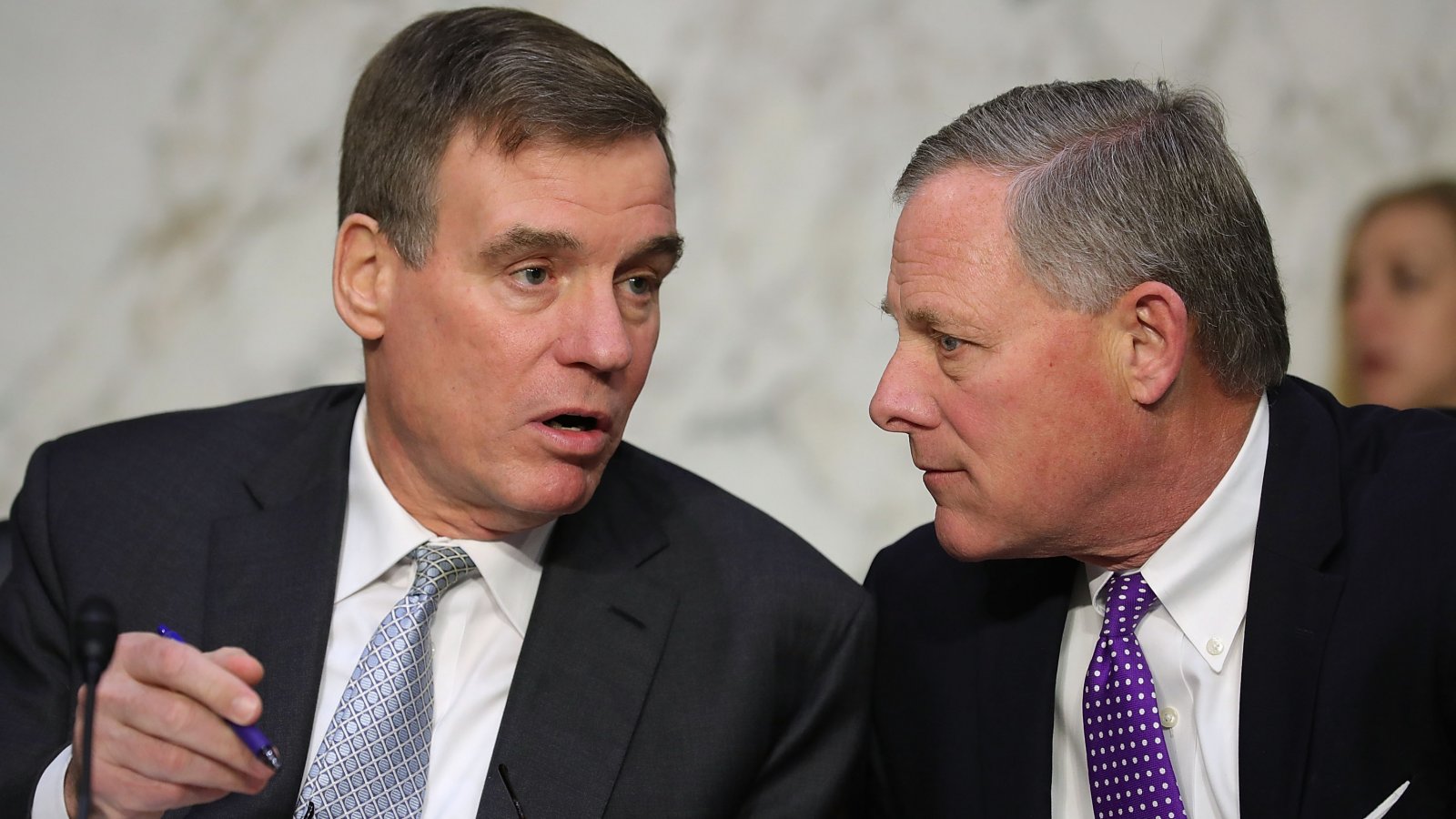
Senators Richard Burr (R-NC) and Mark Warner (D-VA) – leaders of the Senate Intelligence Committee – are presenting ways the U.S. can improve election security in anticipation of more Russian interference this year and holding a hearing Wednesday on "examining attempted hacks on state elections systems in 2016 and the federal and state response to those efforts."
Watch report release announcement (C-SPAN)
"We need to be more effective at deterring our adversaries," Burr says. "All votes should have an auditable paper trail," he adds.
"We were all disappointed that states, the federal government, and DHS were not more on their game in advance of the 2016 elections," says Warner.
The six draft recommendations released Tuesday include the following:
1. Reinforce States’ Primacy in Running Elections
2. Build a Stronger Defense, Part I: Create Effective Deterrence
3. Build a Stronger Defense, Part II: Improve Information Sharing on Threats
4. Build a Stronger Defense, Part III: Secure Election-Related Systems
5. Build a Stronger Defense, Part IV: Take Steps to Secure the Vote Itself
6. Assistance for the States
Full details: SUMMARY OF DRAFT SSCI RECOMMENDATIONS
Overall, experts say far too little has been done to shore up vulnerabilities in 10,000 U.S. voting jurisdictions that mostly run on obsolete and imperfectly secured technology. Russian agents targeted election systems in 21 states ahead of the 2016 general election, the Homeland Security Department has said, and separately launched a social media blitz aimed at inflaming social tensions and sowing confusion. Top U.S. intelligence officials have said they've seen indications Russian agents are preparing a new round of election subterfuge this year.
There's no evidence that any hack in the November 2016 election affected election results, but the attempts scared state election officials who sought answers about how their systems had been potentially compromised. DHS took nearly a year to inform the affected states of hacking attempts, blaming it in part on a lack of security clearances. Lawmakers in both parties have pressed the department on why it took so long.
Warner has said he thinks the process to prevent such hacking needs to be more robust, especially since President Donald Trump has not addressed the matter as an urgent problem.
(...)
At the hearing Wednesday, former Homeland Security Secretary Jeh Johnson and current Homeland Security Secretary Kirstjen Nielsen will both testify.
The hearing could help revive a stalled bipartisan election security bill that mirrors much of what the Intelligence panel called for on Tuesday.
The measure has the backing of several Intelligence committee members, including Sens. James Lankford (R-Okla.), Kamala Harris (D-Calif.) and Martin Heinrich (D-N.M.), as well as hawkish Republican Sen. Lindsey Graham of South Carolina and Collins, a moderate Republican from Maine.
A spokeswoman for Warner tweeted on Tuesday that the Virginia Democrat would also be joining as a sponsor of the bill.
Like the Intelligence Committee recommendations, Lankford’s legislation would emphasize that elections are states’ turf, propose improvements to cyber threat information sharing, establish a state grant program for voting security upgrades and create voluntary cybersecurity guidelines that states could get money to implement.
Senate committee launches effort to prevent election hacking (AP)
SUMMARY OF DRAFT SSCI RECOMMENDATIONS (Senate Intelligence Committee)
Senate Russia probe makes bipartisan pitch on election security (Politico)